

The Science of Escape Rooms
What makes escape rooms so captivating?
Beyond the immersive themes and thrilling challenges lies a fascinating interplay of psychology, cognitive science, and game design that goes into Columbus, Ohio room escapes. Escape rooms aren't just entertainment; they're carefully crafted experiences that tap into fundamental aspects of human behavior, from problem-solving and teamwork to stress management and the psychology of flow.
This category delves into the science behind the escape room phenomenon, exploring the cognitive processes involved in puzzle-solving, the social dynamics of collaborative gameplay, the neurological impact of immersive environments, the fun things players can do to improve the overall experience (before, during, and after), as well as the application of game theory principles to create engaging and rewarding experiences. Discover the scientific principles that make Columbus escape rooms so effective at fostering teamwork, enhancing cognitive function, and providing a unique form of experiential learning.















The Psychology of the Play
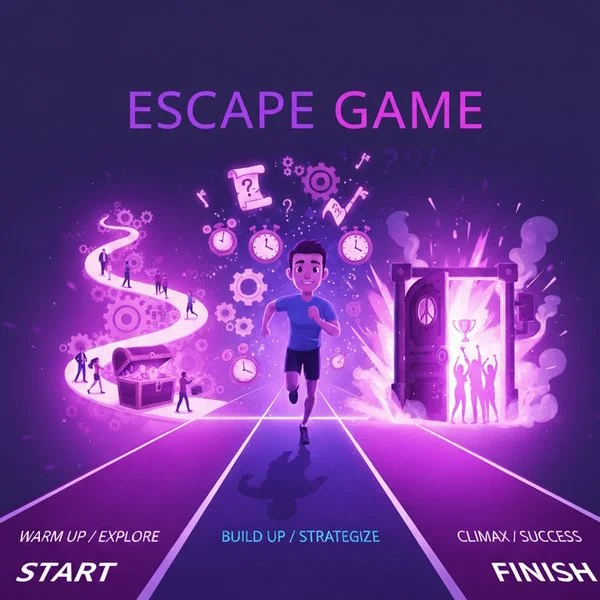
There is a specific science to why escape rooms are so satisfying, and it’s called "Flow State." This happens when a challenge is perfectly balanced with a player's skill level. In our Columbus studio, we design our games to trigger this state by using logical puzzling that rewards teamwork and lateral thinking.
Beyond the individual puzzles, there is the science of collaborative dynamics. Our rooms are custom-built to ensure that every player has a role, whether you are an analytical thinker or a creative explorer. By combining well-researched historical narratives with tactile, mechanical interactions, we create a sensory experience that grounds your brain in the moment. It’s not just about escaping a room; it’s about the neurochemistry of a shared victory.